Shahariar Ryehan
I design and validate MEMS-compatible acoustic sensors — from a photoacoustic CO₂ gas sensor built during my thesis internship at Hahn‑Schickard (Germany) to nonlinear wave models published in five peer-reviewed journals. I'm finishing the Erasmus Mundus Joint Master WAVES and looking for a PhD in acoustics, MEMS sensing, or applied mathematics.






research papers
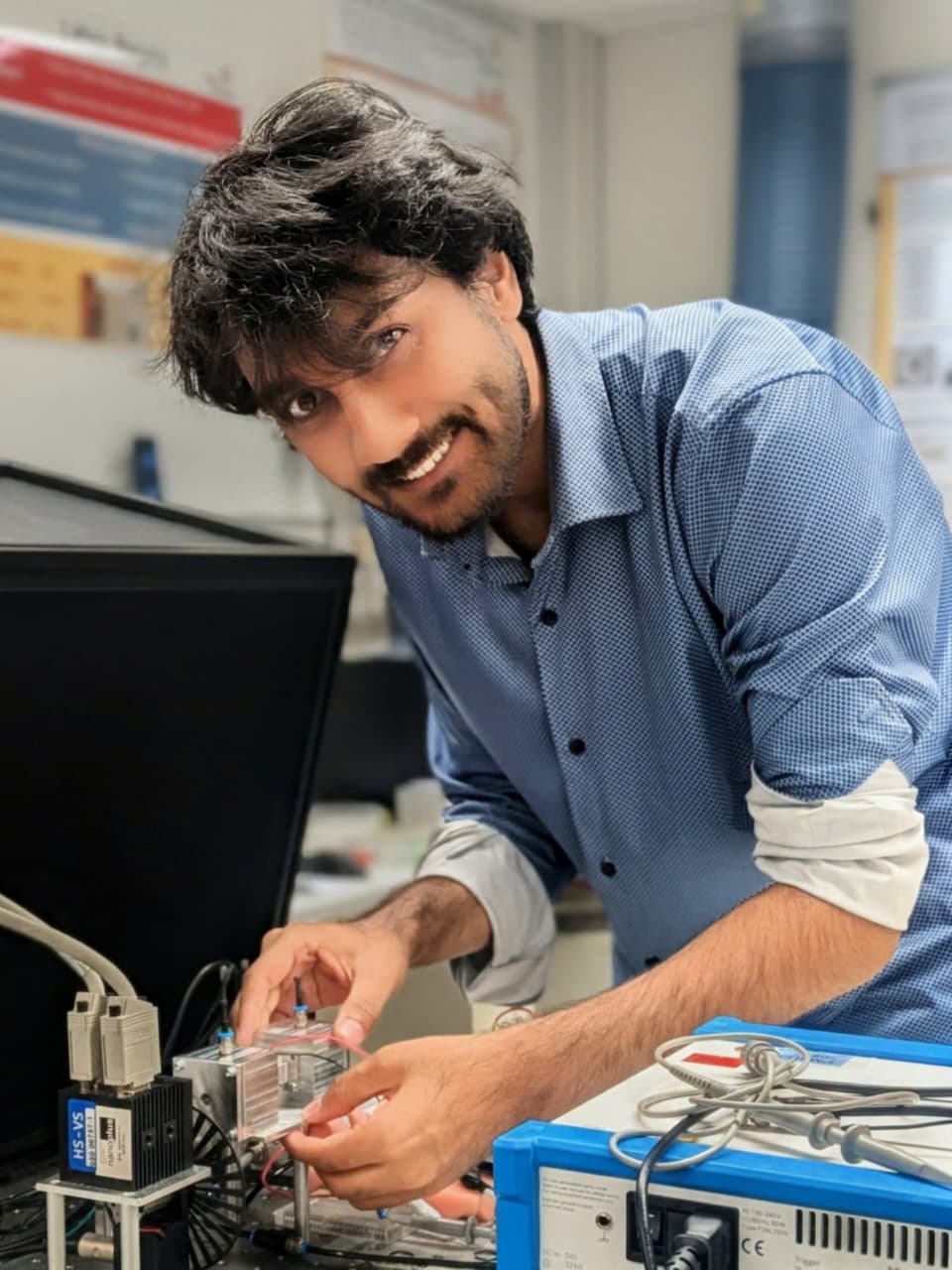
A MEMS-Compatible Photoacoustic CO₂ Sensor
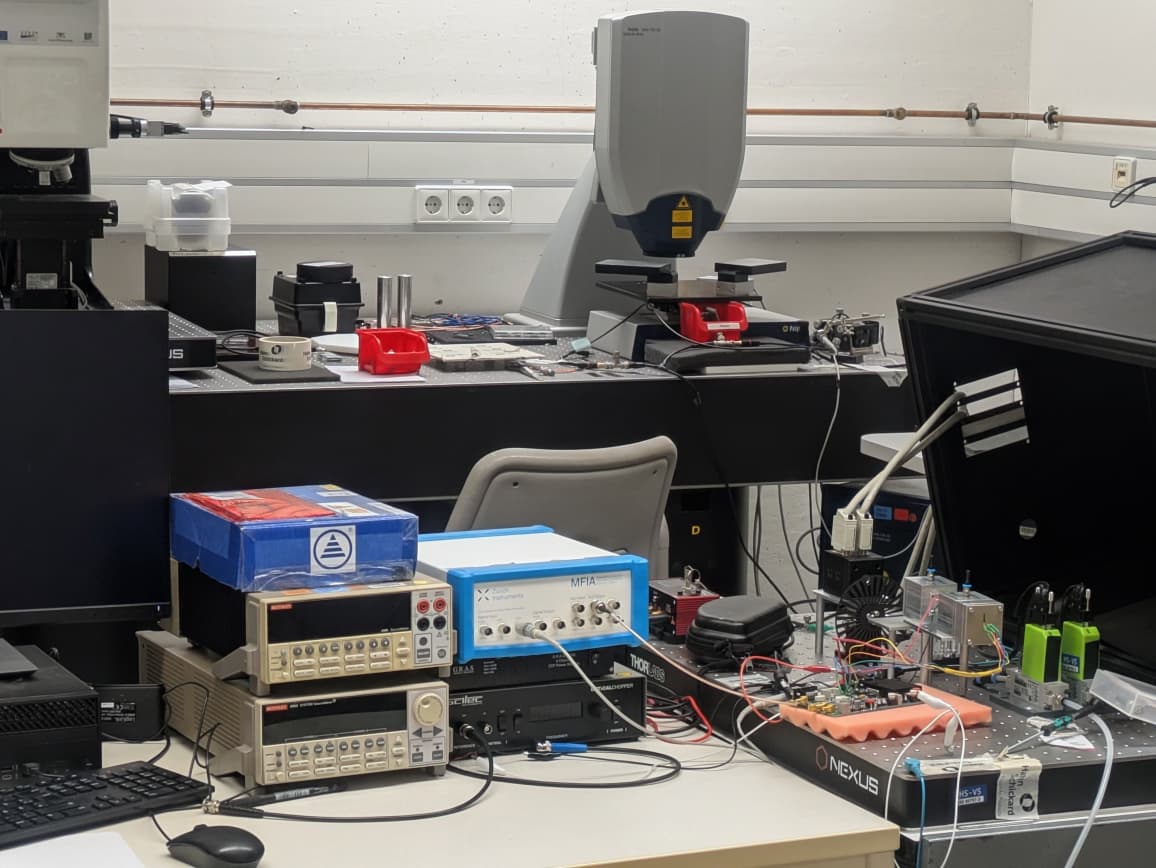
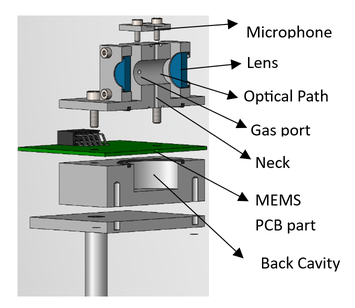
Seven months at Hahn‑Schickard (Villingen‑Schwenningen, Germany) designing, modeling, and experimentally validating a photoacoustic gas sensor — from a baseline resonance cell to a tunable, MEMS‑ready Helmholtz resonator. My main target the whole way through: getting the resonator geometries right.
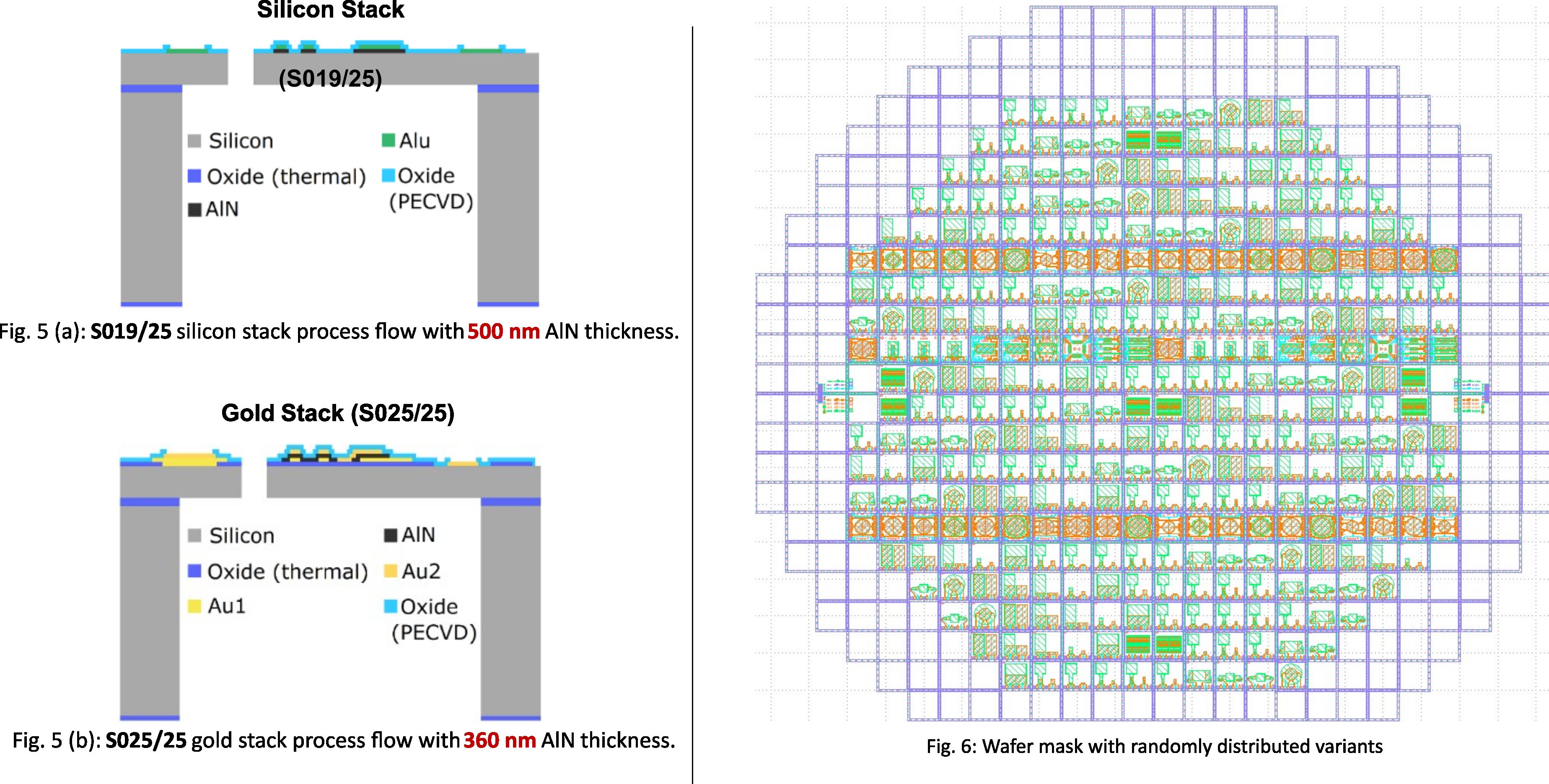
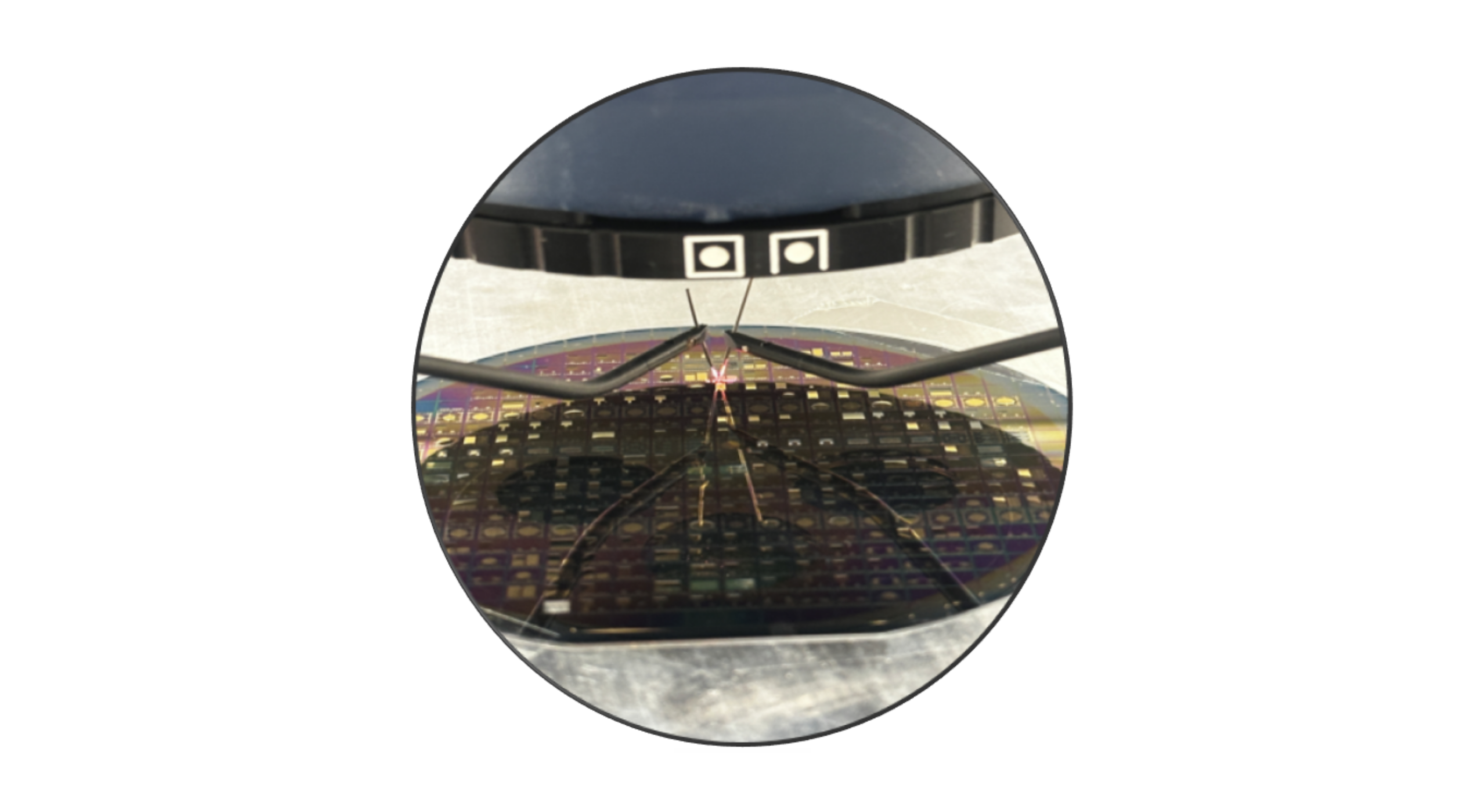
MEMS geometry, from mask to wafer
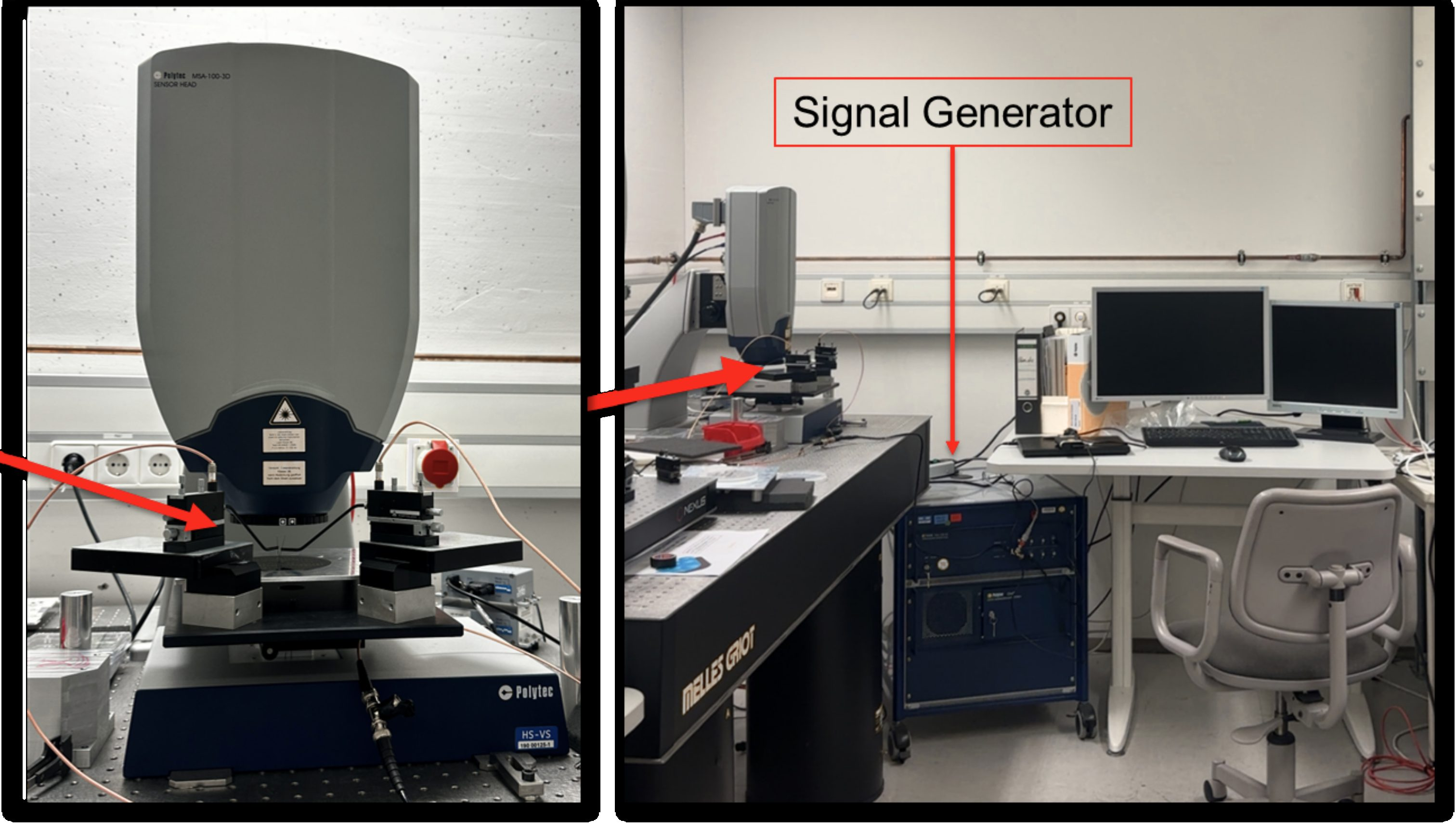
The resonator's cantilever microphone is fabricated on a two-mask silicon process: a silicon stack (500 nm AlN piezoelectric layer) and a gold stack (360 nm AlN, with a gold electrode pair) built up from thermal oxide, PECVD oxide, and patterned aluminium or gold on a bare silicon wafer. Dozens of geometry variants are patterned across a single wafer and diced apart, then characterized one-by-one with a laser Doppler vibrometer before being mounted into a resonator housing.
Trained across five institutions
A fully-funded, two-year Erasmus Mundus master's across three European countries, capped by a thesis placement in a fourth — building on undergraduate research back home in Bangladesh.
 University of CoimbraPortugal
 Universitat Politècnica de ValènciaSpain
 Aix‑Marseille UniversitéFrance
 Hahn‑SchickardGermany · Master's Thesis
 Hajee Mohammad Danesh Science and Technology UniversityBangladesh
From nonlinear wave equations to physical sensors
My research sits at the intersection of applied mathematics and experimental acoustics. I started out studying soliton solutions of nonlinear PDEs — publishing on ocean waves modeled by the Kadomtsev–Petviashvili equation and on stochastic Bogoyavlenskii dynamics — and have since moved into hardware: designing acoustic resonators, running thermoviscous FEM simulations in COMSOL, and building lumped‑element circuit models to make that hardware fast to iterate on.
I'm currently finishing the Erasmus Mundus Joint Master WAVES (Waves, Acoustics, Vibrations, Engineering and Sound) across the University of Coimbra, Universitat Politècnica de València, and Aix‑Marseille Université, and completed my thesis research at Hahn‑Schickard in Germany. I moved from a math undergraduate into experimental acoustics on purpose, to learn lab work before a PhD — more on exactly what I'm looking to keep working on below.
Research interests for a PhD
Four threads run through my thesis, my published papers, and the labs I've reached out to. Each one is a different surface of the same idea: model a resonant or impedance system carefully enough, and it starts telling you things a single reading never could.
MEMS resonant & impedance sensing
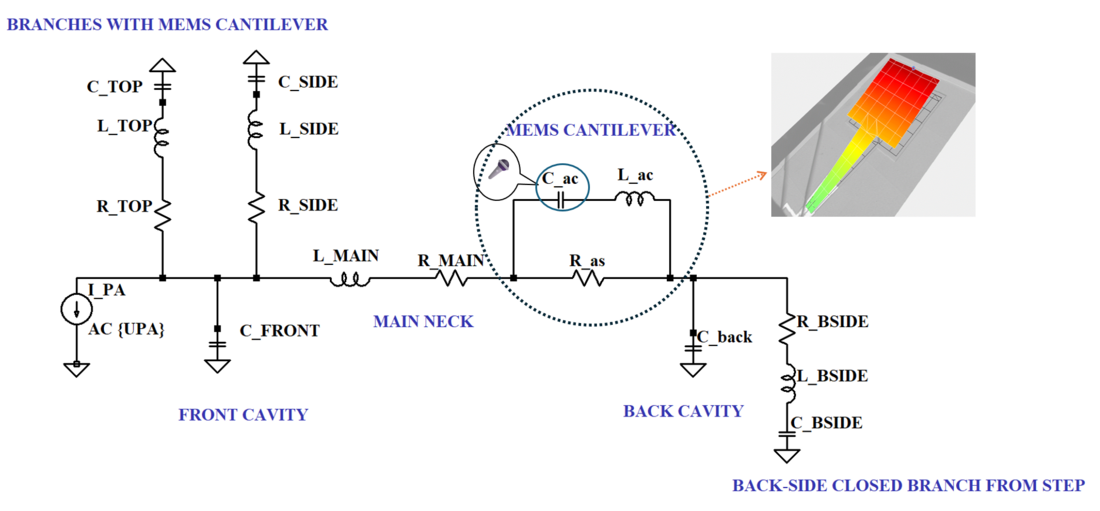
Building a resonator or electrode system as a lumped-element equivalent circuit, matching it to COMSOL and measurement, then using that model to pull apart what a single reading can't: a drifting electrode interface from real tissue change, one species from background water chemistry, a gas concentration from laser noise. This is the core method from my thesis at Hahn‑Schickard, and the one I most want to carry into a new sensing problem.
Nonlinear acoustics & acoustic metamaterials
Granular chains, tapered-plate acoustic black holes, and structure-borne vibration damping. I'm running two side investigations on this at Hahn‑Schickard alongside published work on Hertzian-contact and Pochhammer–Chree soliton dynamics in granular metamaterials.
Nonlinear waves & solitons in photonics and materials
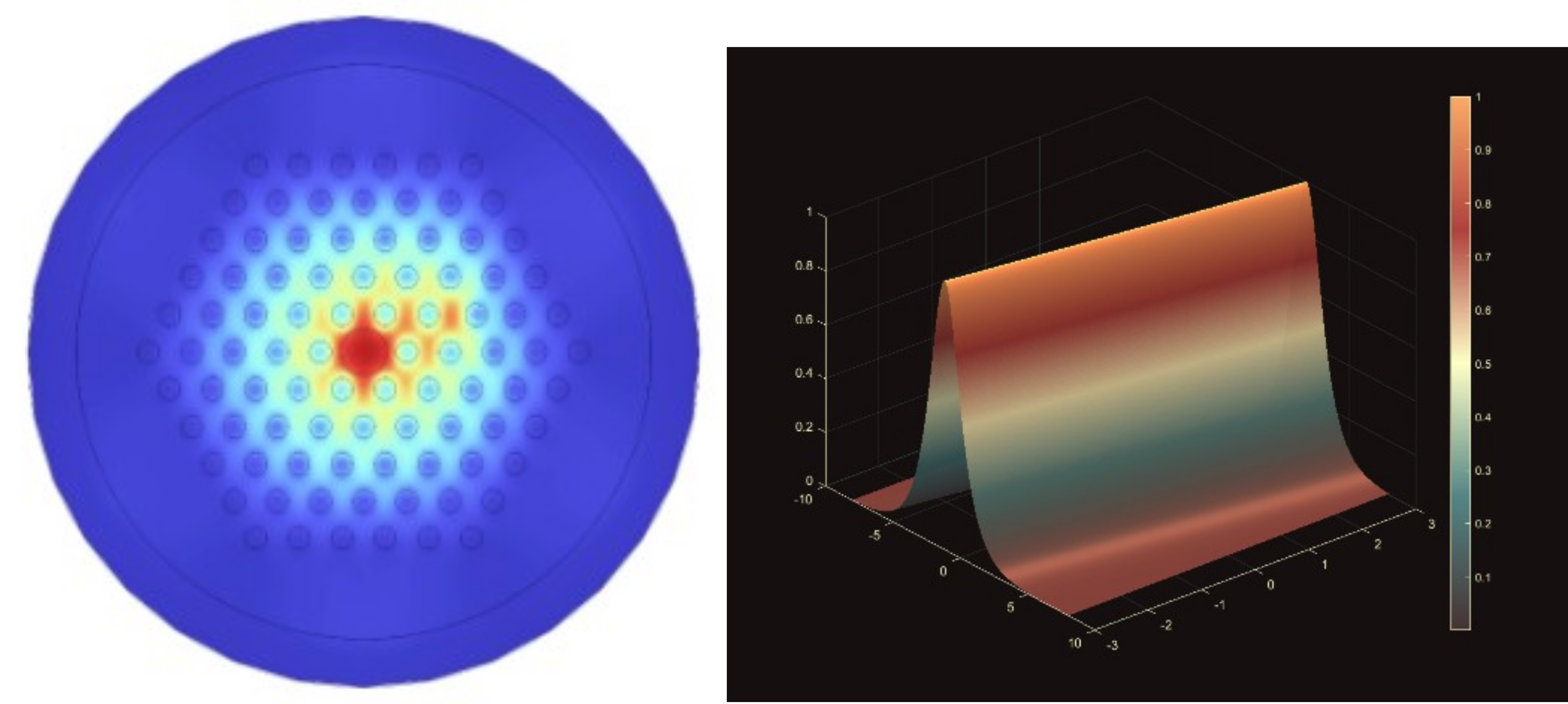
PDE-based soliton modeling applied to concrete physical problems rather than left as pure theory: a Kerr-soliton photonic-crystal-fibre glucose sensor, a voltage-dependent soliton model of MOSFET potential distribution, variable-order fractional chaotic systems, and Rossby solitons in atmospheric blocking.
Biomedical & lab-on-chip sensing
Carrying the resonant/impedance modeling approach into implantable and microfluidic devices — bioimpedance sensing capsules, impedance flow cytometry, wireless MEMS flow sensors — as a way of bridging an acoustics background into biomedical engineering.
Conversations in progress
A sample of the outreach, interviews, and applications underway right now — labs and departments working on problems closely related to my own research.
Oct 2026
Nanopore-Based DNA & Protein Sensing
An industrial PhD on nanopore sensing — electrochemistry and ion-transport modeling, built on the lock-in detection and noise analysis from my own thesis work.
Apr 2026
Chip Integration of a Diamond Maser
NV-center diamond masers for chip-scale quantum sensing — microwave resonator design and the stability analysis behind my published work.
2026
MEMS & Electromagnetic Biomedical Sensors
Implantable MEMS sensors read as damped resonant circuits, extending the resonator modeling from my photoacoustic thesis.
2026
BioMEMS & Flow Sensing
Microfluidic flow sensing via phase-based signal extraction — the same approach behind the FFT amplitude/phase work in my sensor research.
2026
Bioimpedance Sensing Capsules
Ingestible bioimpedance capsules — multi-frequency equivalent-circuit modeling, extending my lumped-element resonator work.
2026
Impedance Flow Cytometry
Microfluidic impedance cytometry — an equivalent-circuit model of the sensing cell to pick the best measurement frequencies.
Oct 2026
Classical-Mechanical Analogues of Qubits
Metamaterial/vibration systems that mimic quantum information processing — the mechanical side of a quantum interest I never got to pursue directly.
Sep 2026
Minimally-Invasive Neuro-Biomarker Sampling
Biomedical microsystems for minimally invasive sampling, bridging MEMS fabrication into clinical devices.
Oct 2026
Photoacoustic Aerosol & Black-Carbon Measurement
Photoacoustic instrumentation for atmospheric black-carbon measurement — the same physics as my MEMS CO₂ sensor, at a different scale.
Oct 2026
Modular Actuator-Sensor Units for Over-Actuation
Precision mechatronic units combining actuation and sensing — a systems-level extension of my instrumentation work.
Sep 2026
Glueless Packaging of MEMS Microfluidic Chips
Hermetic, glue-free packaging for microfluidic MEMS sensors — the fabrication-reliability problem behind every lab chip I've built.
2026
Coupled Kerr Parametric Oscillator Networks
Networks of nonlinear MEMS/electrical oscillators for quantum-inspired computing, extending my nonlinear-dynamics publications.
2026
Ultrasound & Biomedical Engineering
Ultrasound-based biomedical sensing, applying my acoustic measurement background to a clinical setting.
Plus cold outreach, not yet answered, to another nine labs across the US working on closely related problems — chip-scale MEMS flow sensors, Parylene wireless flow sensors, resonant MEMS gas sensors, chemical/gas microsensors, thermal effects in microsystems, acoustic MEMS microphones, photoacoustic biophotonics, and piezoelectric MEMS microphones.
Education & research timeline
Research Intern / Master's Thesis
Designed and validated a MEMS-compatible photoacoustic CO₂ sensor: two resonator geometries, COMSOL FEM, and a lumped-element circuit model.
MSc, Acoustic & Vibration Engineering
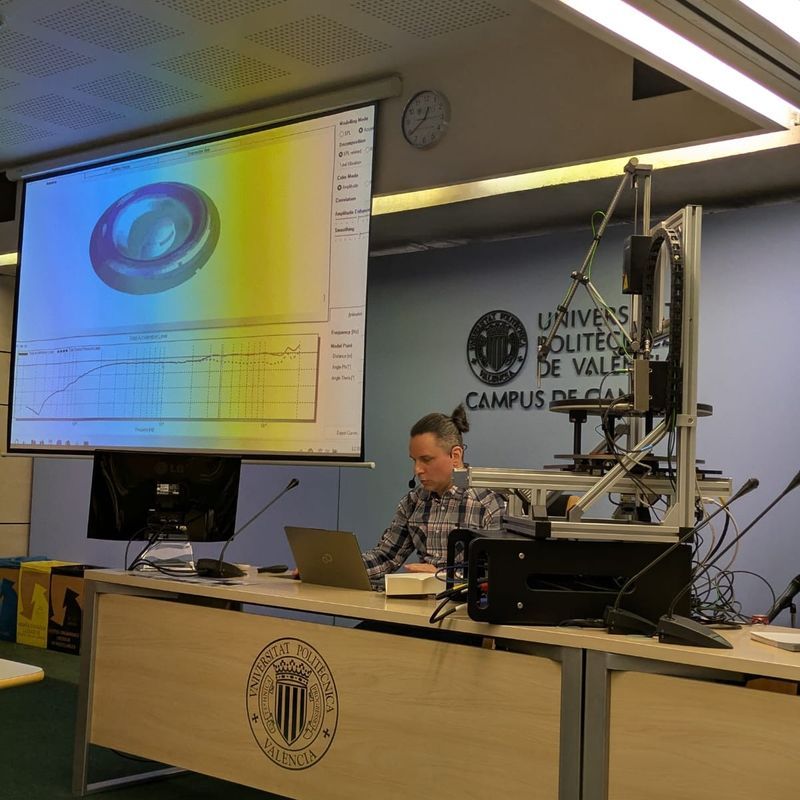
Five lab placements: vibration & porous-materials work in Coimbra, electrical instrumentation in Valencia, granular-metamaterials internship and MEMS acoustic imaging in Marseille.
BSc & Research Assistant
Published research on soliton solutions of nonlinear PDEs; organized and taught mathematics/physics olympiad programs. Ongoing work on a photonic-crystal-fiber sensor for non-invasive blood-glucose detection.
Papers & preprints
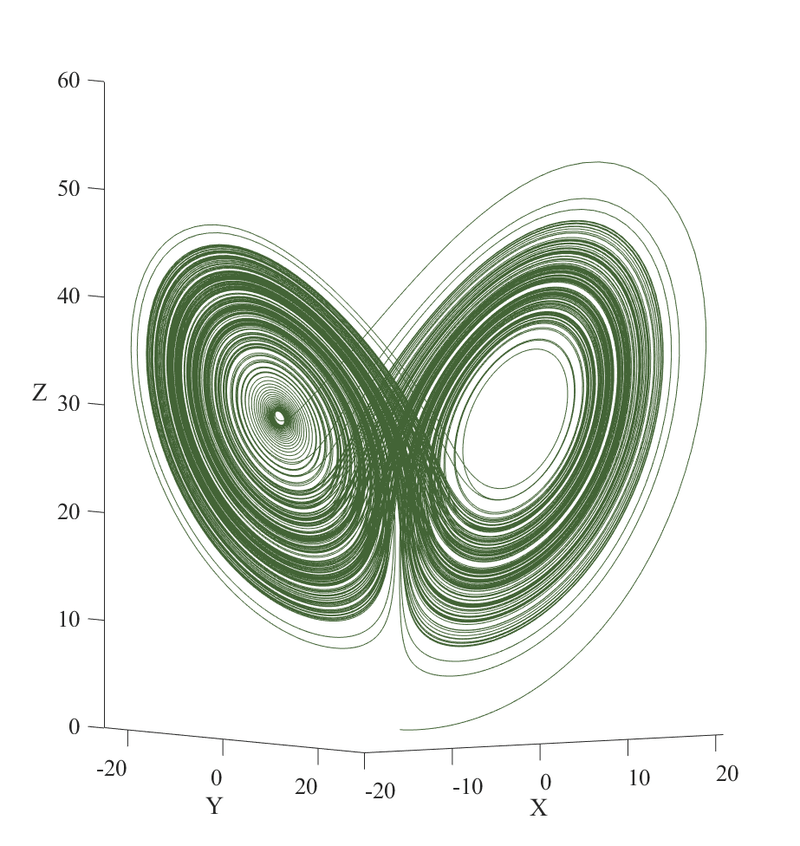
Unraveling Chaotic Dynamics in Variable-Order Fractional Systems
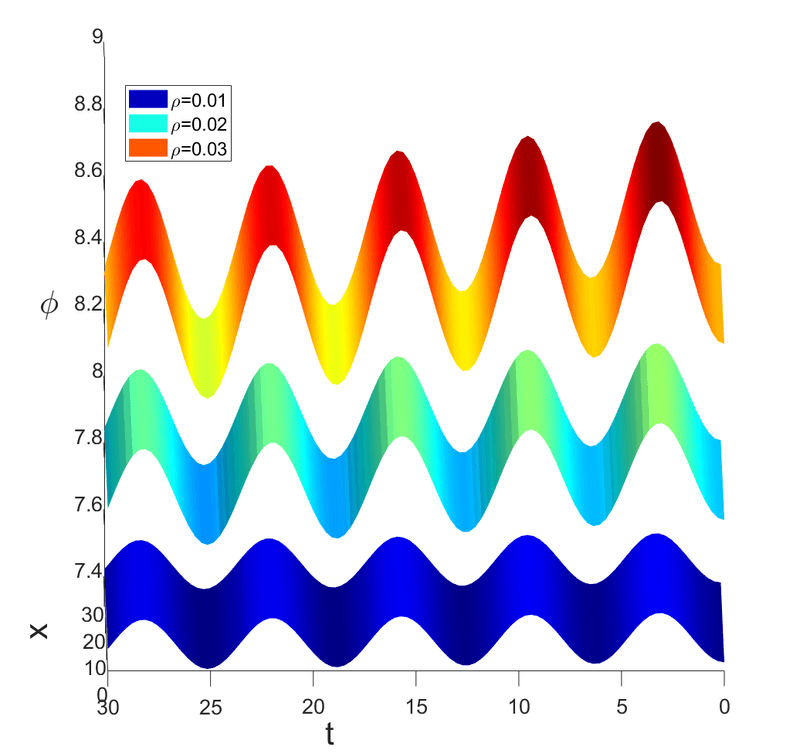
From Hertzian Contact to Pochhammer–Chree Dynamics: Solitons, Chaos & Bifurcation in Granular Metamaterials
Explaining sensors by animating them
A short animation series breaking down how specific MEMS devices actually work, mechanism by mechanism, rather than just a cross-section drawing.
1-DOF Resonant E-Field Sensor
Interdigitated electrodes & a resonant shutter
Piezoelectric Cantilever Actuator
Single-layer vs. dual-layer relaxor ferroelectric
Ultrasonic Crack Detection
Pulse-echo NDT in an aluminium wing skin
Photoacoustic CO₂ Sensor
Chopped laser, resonator & lock-in detection
More on LinkedIn.
Looking for a PhD position
Open to doctoral opportunities in acoustics, MEMS sensing, and nonlinear wave phenomena.
Get in touch